
The original Halifax Wanderers, Wanderers Amateur Athletic Club, famously competed in virtually every sport that was played in Canada during their existence from 1882 to 1982. WAAC, founders of the Wanderers Grounds and inspiration behind Halifax Wanderers FC’s name, did play soccer, but were best known for rugby, basketball, and hosting athletic events for the people of Nova Scotia. However, they were also one of the first organized hockey teams in the province, possibly the first.
We visited the Birthplace of Hockey Museum in Windsor, Nova Scotia, to learn more about the sport’s beginnings and the Wanderers' connection to the game:
Nova Scotia and the birth of hockey
They say hockey wasn’t so much invented; rather, it evolved from sports like field hockey and hurley onto the frozen waters of Canada.
Nova Scotia is one of the most important locales for the early days of hockey, with a famous claim that the sport’s ‘birthplace’ was a body of water called Long Pond in Windsor. Local historians point to the writings of Windsor resident Thomas Chandler Haliburton in the 1800’s as the first written reference to hockey. Haliburton wrote of the local youth playing Hurley on the Long Pond.
Others believe Dartmouth may have been first, with written claims of a game similar to ice hockey being played on Lake Banook or on the frozen stretches of the Halifax Harbour by the Mi'kmaq.
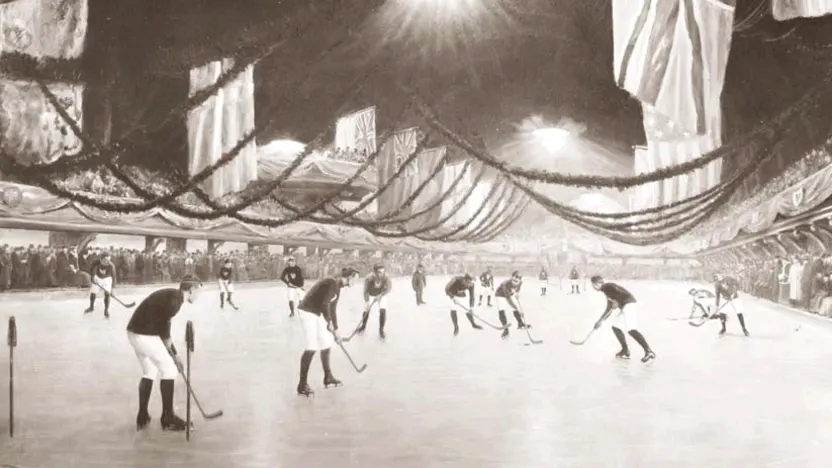
What is not disputed is the important contribution of one Nova Scotian to the first documented game of ‘organized hockey’. James Creighton, a Halifax-born and raised engineer, put together the first official hockey game on March 3, 1875 at the Victoria Skating Rink in Montreal. Creighton is today remembered by historians as the ‘father of ice hockey’.
Thegamewasplayedaccordingto‘HalifaxHockeyClubRules’,usingawoodenpuckashadbeencommonplaceinNovaScotiafordecades.NovaScotia’sworld-famousStarr‘HockeySkates’,madebytheStarrManufacturingCompanyLtd.ofDartmouth,NovaScotia,patentedin1866,weretheonlyself-fasteningskatesavailableintheworldatthetime.Hand-madehockeysticks,carvedbyNovaScotia’snativeMi’kmaqcraftsmen,hadbeensentupbyCreighton’sfriendsfromNovaScotiaespeciallyforMontreal’sfirstgames.Birthplace of Hockey Museum
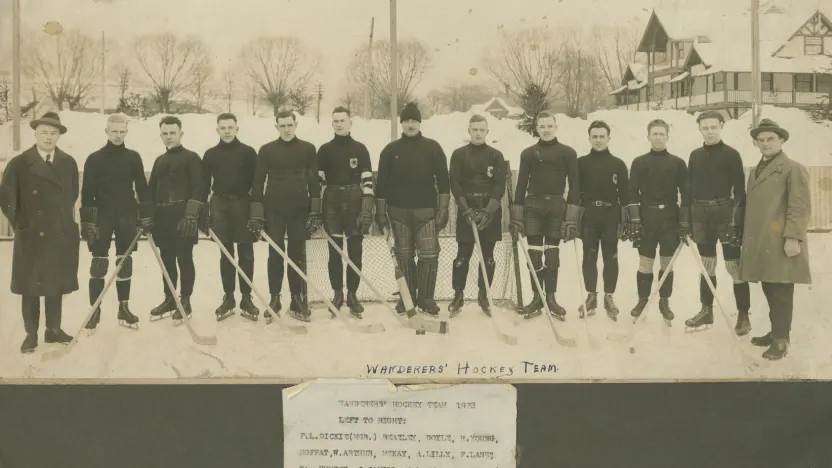
The Halifax Wanderers Hockey Team
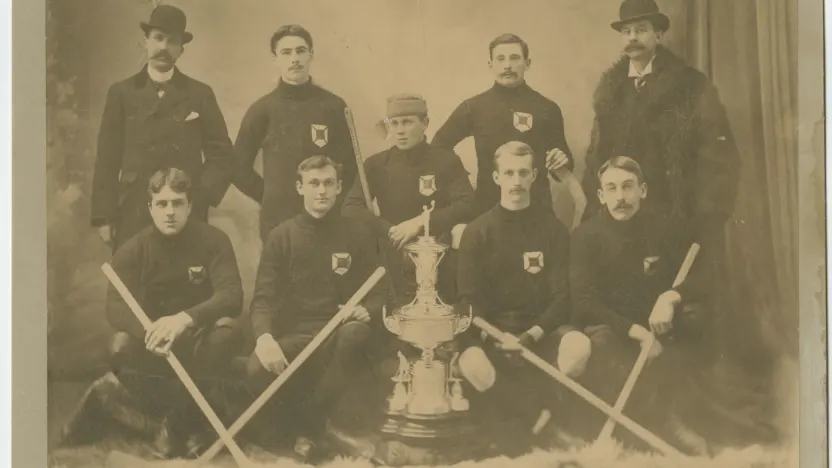
After that historic night in Montreal, the game went from informal scrimmages on lakes and ponds to the formation of the first hockey teams and leagues. According to newspaper reports, Halifax’s first documented game of organized hockey was played in March of 1883, between the Micmac and Hiawatha Lacrosse Clubs. The Halifax Wanderers’ first foray into hockey came in 1884, when the club divided its members into two teams: Red & Black vs. Blue, for an exhibition at the Empire Rink, located within walking distance of Wanderers Grounds (where The Cathedral Church of All Saints now stands). Red and Black won 1-0.
In the years that followed that first game on Tower Road, the Wanderers’ hockey team went on to become the first-ever winners of Atlantic Canada’s biggest (literally and figuratively) hockey trophy, the Starr Trophy. Donated by Starr Manufacturing, a Dartmouth-based company famous around the world for its ice skates and an important brand during the infancy of organized hockey. The Starr Trophy was the Maritimes' own version of the Stanley Cup, with many historic teams from Nova Scotia, New Brunswick and Prince Edward Island claiming the title of champions.
Wanderers Amateur Athletic Club captured that first-ever Starr Trophy championship in March of 1897, defeating the Dartmouth Chebuctos 3-1 in front of over 2500 people. The Wanderers needed a little luck to defeat a Dartmouth side that won the city league championship a year prior, and according to the Halifax Herald, forward Edward Keefe played with a four-leaf clover in his belt. The symbol of good fortune was given to Keefe in an envelope from an unnamed Wanderers supporter, along with a poem.
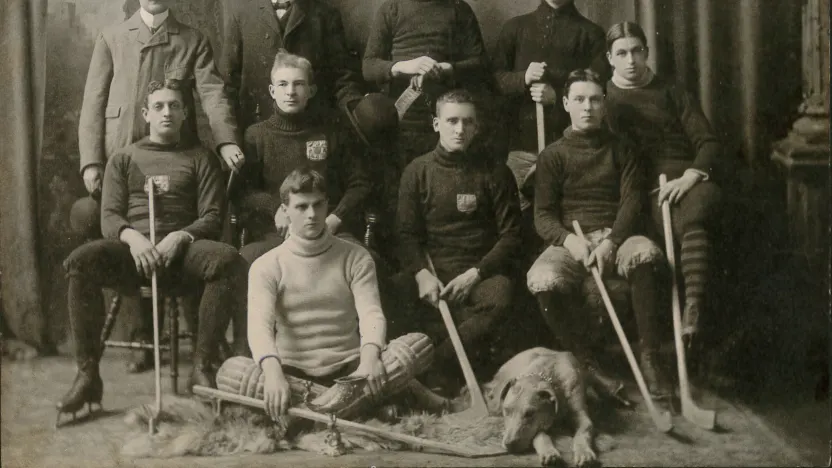
The Wanderers would win the Starr trophy again in 1899 and once more in 1901. A team from Moncton, New Brunswick became ‘owners’ of the trophy after capturing three straight championships in 1907, 1908 and 1909. The Starr Trophy would then be replaced by the Starr Shield; both are now on display at the Birthplace of Hockey Museum in Windsor, NS. However, the Starr Shield was missing for nearly 70 years (more on that coming up).
But the Starr Trophy would not be the last silverware for the Wanderers, who advanced to multiple championship matches in the early 1900s and won Halifax City League titles in 1921 and 1929.
The club also entered a team at the Intermediate level, with the ‘Junior Wanderers’ capturing the division’s championship and the Larson trophy in 1900. They won numerous league and provincial titles, including a run of three straight championships in 1921, 1922, and 1923.
Halifax’s newspaper archives call back to many interesting matches involving the Wanderers. One Intermediate championship game played 45 straight minutes of overtime before the rival Halifax Crescents scored the winning goal.
The Wanderers would also play several exhibition games against the historic Montreal Hockey Club, the first team to ever win the Stanley Cup. Halifax pulled off an impressive 4-3 victory in 1897. According to newspaper reports on the match, the hope was for the Wanderers not to lose by too much; instead, Halifax scored 10 seconds into the game! In 1901, the teams played a two-match series in Halifax, with Montreal winning the first game 8-3 and the Wanderers taking the second game 6-2.
A missing Starr Shield is found.
Imagine searching eBay for sports memorabilia and finding a hockey trophy believed to be missing for nearly 70 years. That’s the story of how the thought-to-be-lost Starr Shield was able to return home to the Maritimes.
Last won by Moncton in 1946, the Shield was believed to have been destroyed in a fire and lost forever. So it was quite the shock when hockey historian David Carter found it for sale on eBay from a seller in British Columbia.
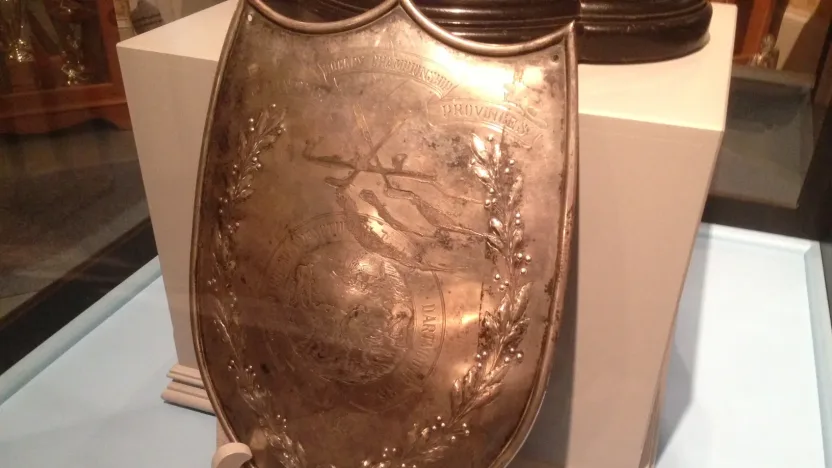
"It was much to my surprise, and I almost fell off my chair. I just couldn't believe that it was actually still in existence,” Carter told CBC. "The seller actually had it for about 20 years; he had found it in a flea market in British Columbia."
Carter helped arrange for the shield to be returned to the East Coast, and you can even see scorch marks from the suspected fire when you view it at the Birthplace of Hockey Museum.
From the Wanderers to the Stanley Cup.
A deep dive into the history books of early professional hockey shows that a Halifax Wanderers player eventually worked their way up to the game’s highest level and captured hockey’s holy grail, the Stanley Cup.
Billy Boyd was a star forward of the Halifax Wanderers team that captured the 1921 Halifax City Hockey League Championship. He averaged a goal per game as the Wanderers finished the regular season tied for first place and shut out the Halifax Crescents 1-0 in the championship game.
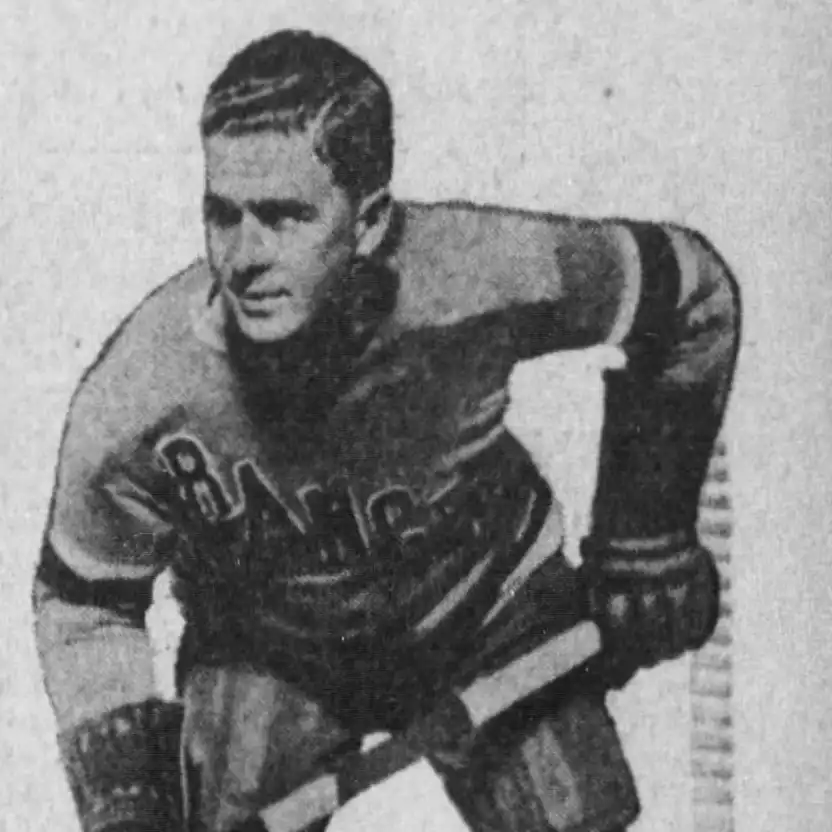
Boyd was eventually recruited by legendary hockey figure Conn Smythe to play for the NHL’s newest team, the New York Rangers. Boyd played three seasons for the Rangers and was a member of the team that captured the Stanley Cup title in 1928.
It was the Rangers’ first Stanley Cup victory, with Boyd being a part of a historic hockey moment en route to the championship. 44-year-old Rangers Coach Lester Patrick had to voluntarily play in goal during the Stanley Cup final after an injury to New York’s only goalie. Patrick had never played a game in goal before but made 17 saves in a 2-1 overtime win for the Rangers.
Halifax Wanderers: Co-inventors of the hockey net?
In the early days of modern sport, everything had to be invented by someone, and the Halifax Wanderers played a part in the creation of the hockey nets you see in rinks around the world today.
In the early years of hockey, goals were created by placing rocks on the ice that faced the sides of the rink, rather than the ends. Because there was no netting covering the posts, goals could be scored from either side of the ice. The rocks were eventually replaced with posts, which were positioned parallel to the ends of the ice surface as is the norm today, but still without a net. A goal-judge would stand on the goal line and ring a bell to declare a goal.
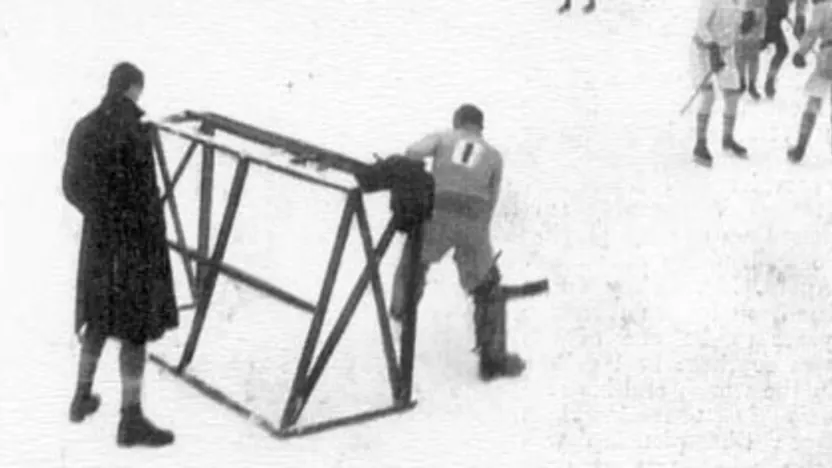
In 1899, the Halifax Wanderers and Halifax Crescents debuted what became known as the Nova Scotia Box Net. As the nets clearly indicated a goal (and allowed the goal judge to hide behind the net from flying pucks), the box goal continued to be used that season. They quickly became popular, with Montreal’s hockey teams trying them out later that year.
Now this claim, like the invention of hockey, is disputed. One year earlier, goalie William Fairbrother of Beamsville, Ontario grew tired of the arguments that came from determining when a goal was scored. He strung a fishing net between his posts, which, like the Nova Scotia Box Net, inspired others to do the same.
Inventors in the 1800s didn’t have the luxury of posting their creations on Facebook, so you could assume neither the Ontarians nor the Nova Scotians knew about each other’s hockey nets, and together inspired the development of the modern hockey goal.
Learn more about Nova Scotia’s hockey history:
The accomplishments of many Nova Scotians are integral to the development of hockey across Canada and around the world.
Below are some resources to read, visit, and watch important stories about the game in the province.
Learn about early hockey history at The Birthplace of Hockey Museum in Windsor, Nova Scotia
The Colored Hockey League of the Maritimes was designated as a national historic event in 2024. The league was the only one of its kind in Canada and in the world in the early 1900s, illustrating how African Canadian communities fought for equality in sports and social change in Canada. The first recorded use of the Slap Shot was by Eddie Martin from the Halifax Eurekas.
Learn more about The Coloured Hockey League of the Maritimes
The Nova Scotia Sport Hall of Fame is currently closed but has plenty of online resources and archives accessible on their website
Archived photos provided by the Nova Scotia Sport Hall of Fame