
Sport can mean something different to everyone.
For some, it starts with a ball, a stick or a field. For others, it becomes a career, a classroom, a community or a way to help others discover what they are capable of.
Ahead of Pacific FC’s Women and Girls in Sport Match, we’re highlighting women in the local community who have found their own place in sport. Their experiences span generations, sports and careers, but each has been shaped by the same thing, a belief in what sport can teach us and where it can take us.
Brianna Waldman
For Brianna Waldman, sport has always been the plan.
More than 20 years later, she has built a career across community sport, programming, major events, education and leadership. Today, she is a Professor of Sport Management at Camosun College, where she helps prepare the next generation of sport professionals for careers of their own.
She is also a Founder and Board Member of the Canadian Street Soccer Association, an organization that uses sport to create meaningful change in communities.
Most recently, Waldman added one of the biggest experiences yet to her career, serving as Fan Operations Venue Manager at BC Place during the FIFA World Cup 2026 in Vancouver.
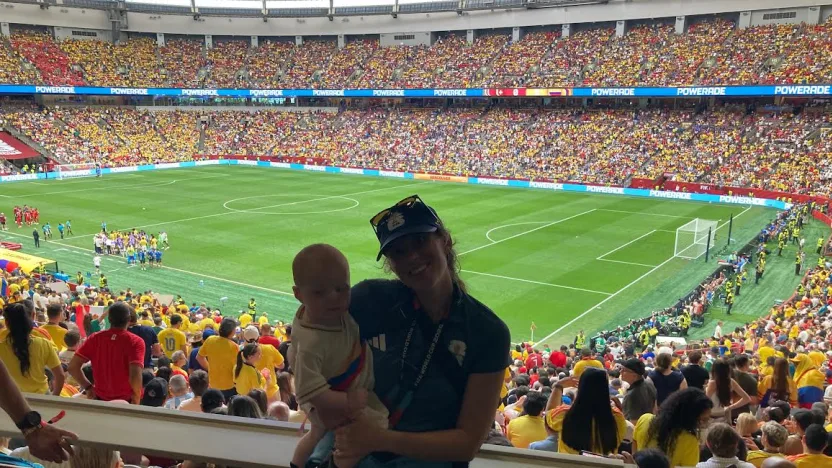
For someone who once dreamed of becoming a professional soccer player, it was a pretty special full-circle moment.
“Sport really has been my North Star ever since,” Waldman said. “What I didn’t know was just how many different directions it would take me.”
While her own path has taken her far beyond the field, Waldman believes one of the most important parts of the future of sport is making sure more women have the opportunity to shape it.
“Women bring so much value to the landscape of sport,” she said. “We bring different perspectives, different ways of leading, different experiences and different ideas.”
For Waldman, that means seeing more women playing, coaching, leading, teaching, officiating, running events and making decisions across the industry.
She also found that one of the best parts of working in sports is the people who make it what it is.
“There is something about people who choose to work in sport,” she said. “They care deeply about what they’re doing, and there is an energy that comes with that that I honestly haven’t experienced anywhere else.”
That passion is what has kept her in the industry for more than two decades, and it is also what she hopes to pass on to the young women entering it today.
“You belong in this industry, and we need you,” Waldman said.
Her advice is simple: try things, ask questions, put yourself forward, work hard and keep following the things that make you excited.
“You don’t need to know exactly where you’re going yet,” she said. “Sometimes you just have to keep following the things that light you up and see where they lead.”
And, apparently, one World Cup isn’t enough. The FIFA Women’s World Cup is now next on the bucket list.
Jill Payne
Jill Payne’s path through sport began on the field and water, but eventually grew into something bigger.
A multi-sport athlete, Payne represented Canada in both spring canoe and rugby before turning her focus toward education, coaching and helping others perform at their best.
Her background in kinesiology and education eventually led her to a Master’s in Employee Engagement and Workplace Performance from the University of Victoria. Today, she is a leadership development consultant, author and the creator of Be A Dime Energy Management, working with leaders, teams and organizations across North America.
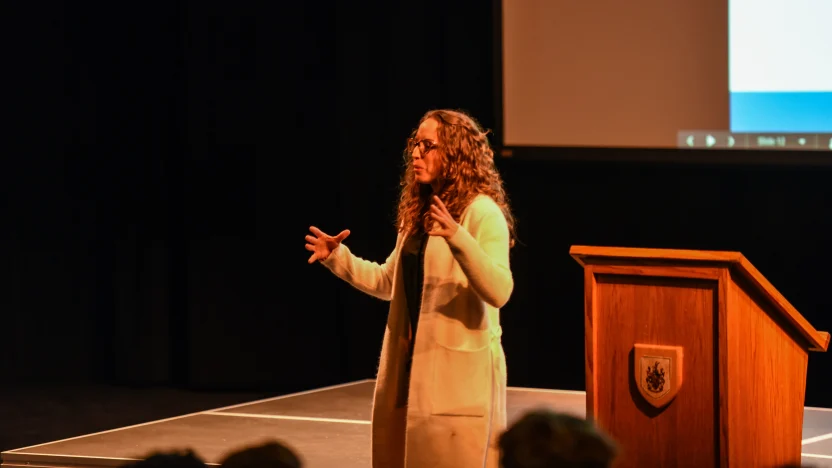
Her work is built around something she learned through sport long before it became part of her professional career, how the way we manage our energy can shape the way we perform, lead, and live.
“I was drawn to sport from a really young age because I loved how it made me feel,” Payne said. “I loved competing, being part of a team, pushing myself and discovering what I was capable of.”
Those lessons stayed with her long after her competitive career ended.
Sport taught Payne that she was capable of doing hard things, but also that strength can look different depending on the person and the situation.
It also showed her the importance of representation.
“The industry has changed enormously since I was a young athlete, but there is still work to do,” she said. “When women are given the opportunity, investment, visibility and space to lead, the impact reaches far beyond sport.”
For Payne, that impact starts early.
One of the lessons she shares with her daughter, Loë, is that “If you never give up, you can learn anything.”
She believes sport gives young girls a unique opportunity to experience that lesson for themselves. You try something you don’t know how to do, struggle through it, make mistakes, try again and eventually accomplish something that once felt impossible.
That confidence doesn’t stay on the field.
“When you learn through sport that you can struggle, keep going and eventually figure something out, you start to believe you can do that in other areas of your life too,” Payne said.
Her advice to young girls is to find a sport that makes them feel alive, surround themselves with people who help them grow and keep showing up.
“You belong there.”
Vivienne Chenowith
At an age when many athletes are still figuring out which sport they enjoy most, Vivienne Chenowith is already making a pretty strong case for trying them all.
Her journey began at four years old when her parents asked her to choose a sport and an instrument. She chose field hockey.
By 10, she had added ice hockey, eventually moving into competitive hockey when there was no longer a league on the Island that offered what she was looking for. She later added softball as an offseason sport before branching out into volleyball and track and field.
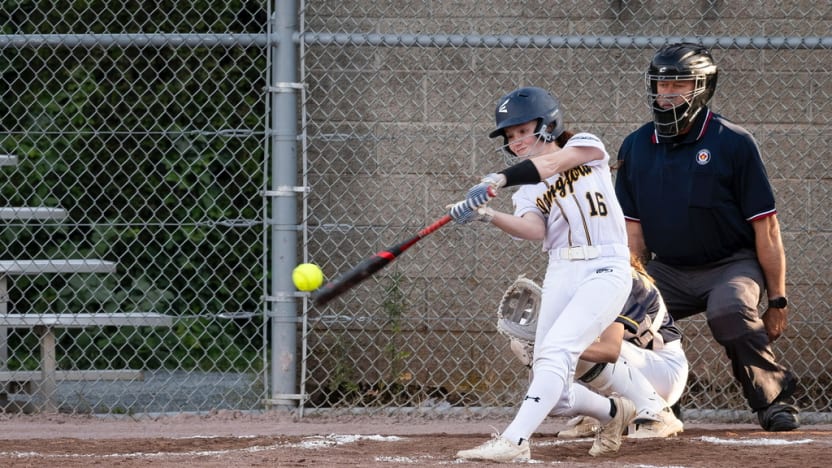
Today, Chenowith represents the Victoria Reign U18A hockey team and U17A Langford Lightning Fastball team, while also playing volleyball for Royal Bay and competing in track.
She has represented BC at the Little League Canadian Championships twice, finished fourth with her school’s 4x100m relay team at provincials and recently attended RBC Training Ground, where she found herself on the national pathway for Skeleton Canada.
So, yes, she is sprinting on the track even when the track is made of ice.
Her coaches have described her as a “Swiss Army knife” because of her ability to play multiple positions, but for Chenowith, the appeal of sport goes beyond simply being good at different things.
“I loved the team culture and how fast the game moved,” she said of her introduction to hockey.
As she has moved through different sports, she has also learned how to handle the parts of competition that don’t always go her way.
“The biggest thing being a woman in sports has taught me was learning to fail and how to deal with disappointment,” Chenowith said.
She admits that she has always been hard on herself, but sport has helped her learn how to manage her emotions, deal with setbacks and keep moving forward.
She has also learned that opportunities in women’s sport are not always guaranteed, particularly in emerging areas like women’s hockey on Vancouver Island.
“You really have to advocate for yourself,” she said.
For the young athletes coming behind her, Chenowith’s message is straightforward.
“There are so many sports in the world that there is a sport for you, all you have to do is find it,” she said. “And don’t let anyone tell you you can’t or that you don’t belong.”
Maddie Mittelsteadt
For Maddie Mittelsteadt, sport has been a part of life from the very beginning.
Growing up in Victoria, Mittelsteadt played with Team BC and Claremont Secondary before continuing her soccer career at the University of Victoria.
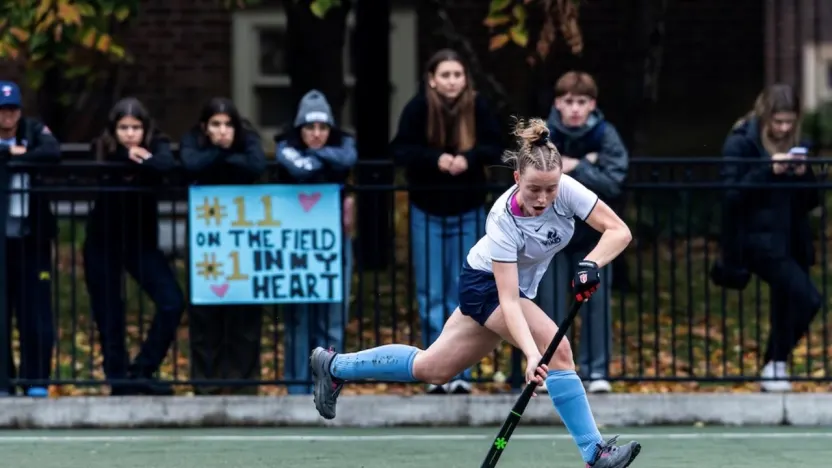
Her time with the Vikes was nothing short of remarkable.
From 2021 through 2024, Mittelsteadt was part of four straight Canada West championship teams and four U SPORTS national championship teams. Across those four seasons, she appeared in 44 games and scored 15 goals, including the game-winning goal against York at the 2024 U SPORTS tournament. She was also recognized twice as an Academic All-Canadian.
But Mittelsteadt's experience in sport has extended beyond being an athlete. In 2023, she joined Pacific FC through a co-op placement, giving her an opportunity to experience the sport industry from a different perspective and see some of what happens behind the scenes of a professional club.
Looking back on her time in sport, Mittelsteadt says the experience has given her much more than what happened on the field.
“Being a woman in sport has given me such a strong sense of community and has introduced me to so many people and experiences that have shaped who I am,” she said. “Sport has taught me that I’m capable of doing hard things, even when they feel intimidating or uncomfortable.”
Now finished her university playing career, Mittelsteadt represents another side of what a life in sport can look like. Her journey has taken her from local fields in Victoria, through four national championship-winning seasons, and into an opportunity to explore the professional side of the game.
For the young girls coming behind her, she encourages them to embrace both the challenges and the people they meet along the way.
“Work hard, take challenges head on, and most importantly, have fun with it,” Mittelsteadt said. “Appreciate the people you meet along the way, stay present, and take the time to enjoy where you are.”
And, perhaps most importantly, she wants young athletes to recognize that they are capable of more than they might think.
“Don’t be afraid to challenge yourself or take up space. You’re more capable than you think!”
Finding your Place in Sport
The stories of these four women look very different.
Brianna Waldman has spent more than two decades building a career in sport and recently found herself working at a FIFA World Cup. Jill Payne turned the lessons she learned as a national-level athlete into a career focused on leadership, energy and helping others perform at their best. Maddie Mittelsteadt built a decorated university career before beginning to explore what comes next beyond the field. And Vivienne Chenowith is still in the early stages of her journey, trying new sports and discovering just how far they might take her.
There is no single path through sport, and there doesn't have to be.
For some, sport becomes a career. For others, it becomes a community, a classroom, a place to challenge themselves or the foundation for whatever comes next.
What matters is that young girls can see those possibilities.
They can see women competing, coaching, leading, teaching, working behind the scenes and creating opportunities for the people coming after them. They can see that there is more than one way to be part of the game.